First Responder PTSD: Signs It’s More Than “Just Part of the Job”
There are some things you expect when you become a first responder. Long shifts. Interrupted sleep. Adrenaline. Seeing things most people don't see. Developing a sense of humor that would probably get you some concerned looks outside of work.
You also learn pretty quickly that the ability to keep functioning matters. You don't get to stop in the middle of a call because something is upsetting. You handle what's in front of you, finish the job, and move on to the next thing.
That ability is necessary. It's also one reason PTSD can be difficult to recognize in first responders. Some symptoms can look a lot like traits the job rewards. Staying alert to everything around you is useful on duty. Compartmentalizing helps you get through difficult calls. Remaining emotionally detached can help you make decisions under pressure.
The problem is when your nervous system stops recognizing when the shift is over.
PTSD Doesn’t Always Start With One Obvious Incident
When people picture PTSD, they often imagine one catastrophic event followed by obvious symptoms. That certainly happens, but trauma in first responders isn't always that straightforward. Sometimes there is a particular call that changes things. A shooting. A fatal accident. A child involved in a traumatic incident. A close call involving yourself or a coworker.
Other times, it's the accumulation. One call might not be the thing that overwhelms you. It may be years of exposure to violence, death, injury, emergencies, grieving families, unpredictable situations, and the constant possibility that an ordinary shift could suddenly become dangerous.
You might not even be able to identify when things started feeling different. That's part of what can make first responder PTSD easy to dismiss. If there isn't one obvious event you can point to, it's tempting to assume you're simply tired, burned out, getting older, or becoming less tolerant of the job.
You Can’t Fully Turn Off When You’re Off Duty
Being aware of your surroundings is part of the job. Depending on your role, noticing exits, watching people's hands, scanning a room, or reacting quickly to unexpected movement may be useful skills. But what happens when you can't stop doing it?
Maybe you automatically choose the restaurant seat where you can see the door. You notice every person who walks into a room. A loud noise makes your entire body react before you know what happened. You can't relax in crowded spaces because you're tracking too many people at once.
Your family may tell you you're always "on," even when you're technically off.
The issue isn't that noticing your surroundings is inherently unhealthy. The question is whether your nervous system still knows the difference between I'm working and need to stay alert and I'm sitting at dinner with my family and nothing currently requires a threat assessment. When that switch becomes difficult to flip, hypervigilance can start affecting life well beyond the job.
Sleep Gets Worse, and You Blame the Schedule
First responders don't exactly have ideal conditions for beautiful, uninterrupted sleep. Shift work, overnight calls, overtime, changing schedules, and the physical effects of adrenaline can all interfere with sleep. So when sleep gets worse, the explanation seems obvious: it's the job.
Sometimes it is. But trauma can also affect sleep. You may have nightmares or dreams connected to calls you've worked. You might wake suddenly without knowing why, struggle to fall asleep because your mind won't settle, or sleep lightly enough that every sound gets your attention. Some first responders are exhausted all day and then strangely alert as soon as they get into bed.
If this sounds familiar, our article on First Responder Sleep Problems: Why You Can’t Shut off After Shift looks more closely at why the transition from high alert to sleep can be so difficult.
Poor sleep can also make everything else harder. Irritability increases. Concentration gets worse. Your patience gets shorter. You have fewer resources available for handling stress, and then you go back to work and do it all again.
You’re Avoiding More Than You Realize
Avoidance is one of those words that can sound much more obvious than it actually is. You may not consciously think, I'm avoiding reminders of trauma.
Instead, you stop taking a particular route because you don't want to pass the location of a bad call. You don't watch certain movies anymore. You shut down conversations when your spouse asks about work. You avoid someone connected to an incident. You stay busy because slowing down gives your mind too much room to wander.
Sometimes avoidance happens internally. A memory starts coming up and you immediately distract yourself. You scroll your phone, pick up an extra shift, turn on the TV, start another project, or pour a drink.
Avoidance works in the short term because you don't have to feel whatever you were trying not to feel. Unfortunately, repeatedly avoiding trauma reminders can also keep those memories feeling dangerous.
Certain Calls Don’t Stay at Work
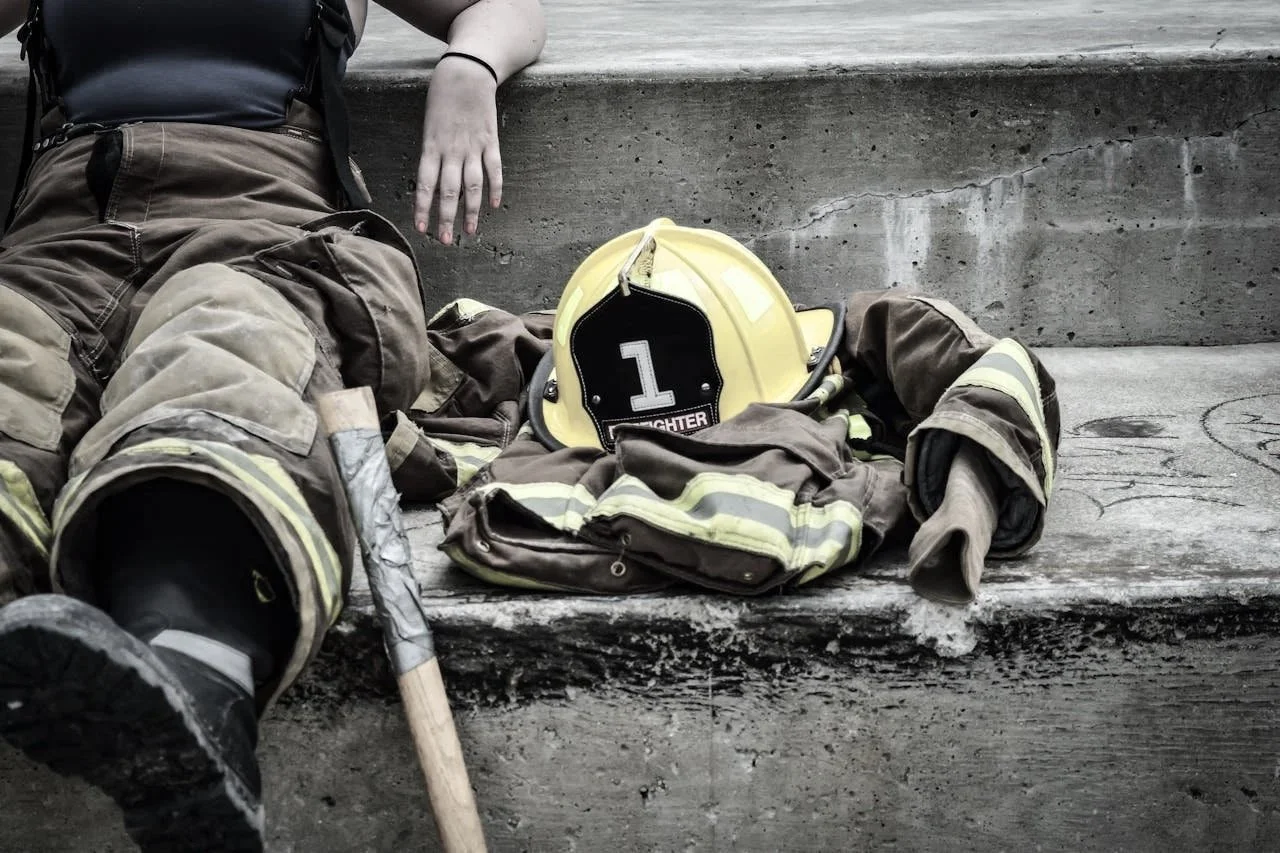
Most first responders have calls they remember. Remembering a difficult call isn't automatically a sign of PTSD. The difference is often in how the memory shows up and what happens when it does.
You might find yourself replaying parts of an incident when you don't want to. A smell, sound, location, or seemingly unrelated situation can suddenly bring it back. Sometimes the reaction is primarily emotional. Other times, your body responds too. Your heart rate changes. Your muscles tense. Your stomach drops. For a moment, your nervous system responds as though something dangerous is happening now rather than remembering something that happened before.
It's a little like a motion sensor light that's become too sensitive. The system exists for a good reason, but now it's reacting to movement that doesn't actually require the whole yard to light up.
Trauma responses can work similarly. Your brain becomes very good at recognizing anything connected to danger, sometimes so good that it starts sounding the alarm in situations that are currently safe.
You’re More Irritable Than You Used to Be
Maybe you're not having nightmares or obvious flashbacks. You're just pissed off all the time. Traffic bothers you more. Noise bothers you more. Your kids asking three questions in a row feels unbearable. Your partner says something minor and you respond much more sharply than you intended.
At work, you may still be able to keep yourself together. Then you get home and discover that whatever patience you had is gone. That can be confusing for families. From their perspective, you managed an entire shift dealing with strangers and difficult situations, then came home and lost it because somebody left dishes in the sink.
But, I think we all know, the dishes may not really be the issue.
When your nervous system is already running close to capacity, ordinary demands can feel like one more thing you have to manage. Irritability can be one way chronic stress and trauma show up, especially when sadness, fear, or vulnerability are harder to recognize or express.
You Feel Less Than You Used to
Not every trauma response involves feeling too much. Sometimes the noticeable change is feeling less.
Things that used to make you happy don't land the same way. You don't feel particularly excited to see friends. You don't want to talk after work. You'd rather be alone, watching something, scrolling, gaming, working in the garage, or doing anything that doesn't require much emotional engagement.
Your partner may say you've become distant. You might not even disagree. You just don't know what you're supposed to do about it.
Emotional detachment can be useful during an emergency. If you're treating a badly injured person, investigating a traumatic scene, or responding to someone else's worst day, being able to temporarily put your own emotional response aside helps you do your job.
The trouble starts when that emotional armor doesn't come off afterward.
Your Relationships Are Taking the Hit
Trauma symptoms rarely stay neatly contained within work hours. Your spouse or partner may notice changes before you do. Maybe you're more withdrawn. You're snapping more often. You don't want to go anywhere crowded. You're drinking more. Physical intimacy has changed. You seem distracted even when you're technically present.
You may also feel misunderstood. It can be difficult to explain first responder work to someone who hasn't experienced it, and sometimes attempts to talk about it feel pointless. You don't want to scare your family, burden them with details, or hear advice from someone who doesn't understand the realities of the job. So you stop talking.
That can protect your family from the details of what you've seen, but it can also create distance. Eventually, your partner knows something is wrong without knowing what it is, and you may not know how to explain it either.
Drinking Has Become Part of How You Come Down
After a high-adrenaline shift, alcohol can feel like a very efficient off switch.
You have a drink and your shoulders finally drop. Your thoughts slow down. You feel less alert. Maybe you can actually fall asleep. That's exactly why the pattern can become difficult.
Alcohol doesn't have to create an obvious crisis before it's worth paying attention to. You may still be working, parenting, maintaining relationships, and handling your responsibilities while gradually relying more heavily on drinking to transition out of work mode. Maybe one drink has become several. Maybe drinking after a rough call has turned into drinking after most shifts. Or maybe alcohol has become the thing you rely on for sleep, socializing, or making the thoughts stop.
Our article, First Responder Substance Use, looks more closely at why substance use can become intertwined with the stress and trauma of first responder work.
You’re Great in a Crisis and Uncomfortable When Nothing Is Wrong
This one can be particularly confusing: At work, when something actually goes wrong, you know exactly what to do. Your thinking becomes clear. You assess the situation, make decisions, and handle it. Then you get a day off and feel restless as hell.
You can't sit still. You start projects. You check work messages. You pick up overtime even though you're exhausted. A quiet house feels uncomfortable rather than relaxing.
When your nervous system spends enough time operating in high-alert environments, activation can start to feel normal. Calm, by comparison, can feel unfamiliar.
That's one reason some people with trauma histories find downtime surprisingly difficult. Why Rest Feels Uncomfortable when You’re Used to Survival Mode explores what can happen when your body has gotten very good at functioning under stress but isn't nearly as practiced at settling down.
“Everyone in This Job Deals With This” Isn’t Always a Good Measuring Stick
This is one of the biggest barriers to recognizing first responder PTSD. Your coworkers may also sleep poorly. They may have calls they can't forget. Dark humor may be everywhere. Everyone seems a little hyperaware in public. Maybe drinking after work is common.
When a behavior is normal within a group, it's easy to assume it's harmless.
But common and healthy aren't necessarily the same thing. Instead of asking whether your reactions are normal for the job, it can be more useful to ask what they're costing you.

Can you relax when you're off duty?
Are you sleeping?
Do you still enjoy things outside of work?
Are you connected to your family?
Are you avoiding places or experiences because of what they bring up?
Are you drinking more than you want to?
Does your body feel like it's working even when you're not?
Those questions tell you more than whether the person working beside you is dealing with the same thing.
When Is It More Than “Just Part of the Job”?
There isn't one symptom that automatically means you have PTSD. PTSD is a clinical diagnosis, and many of the experiences discussed here can overlap with burnout, depression, anxiety, sleep deprivation, substance use, grief, or other responses to chronic stress.
Duration matters. Intensity matters. The effect on your life matters.
If changes in sleep, mood, behavior, relationships, concentration, substance use, or your ability to relax have persisted and are interfering with your life, they're worth taking seriously. You also don't have to wait until your career or marriage is falling apart. Being able to keep doing the job doesn't tell you how well you're doing everywhere else.
What Does Trauma Therapy Look Like for First Responders?
For many first responders, one concern about therapy is pretty simple: I don't want to sit in a room and talk about every horrible thing I've ever seen.
Trauma therapy doesn't necessarily work that way. The first step is understanding what's happening now. What situations trigger a reaction? What are you avoiding? How are you sleeping? What's happening at home? What does your body do when you're reminded of certain calls? What have you been doing to manage all of it?
From there, treatment can be tailored to the person rather than assuming every first responder needs the same thing.
Approaches such as EMDR Therapy and Brainspotting may be used to help process traumatic experiences, particularly when someone understands logically that an event is over but continues to experience strong emotional or physical reactions to reminders of it.
The goal isn't to make you less aware, less capable, or somehow worse at your job.
It's to help your nervous system become better at recognizing when the threat is actually over.
First Responder PTSD Therapy in Charleston, SC
First responders face a particular challenge when it comes to mental health: many of the things that help you function professionally can make it easier to ignore what's happening personally.
You may be exceptionally good at compartmentalizing. You may know how to keep moving after a difficult call. You may have worked around people experiencing the same symptoms for so long that they barely register as unusual anymore. That doesn't mean you have to wait for a crisis before addressing them.
Waterfall Wellness Center works with first responders dealing with trauma, PTSD, anxiety, sleep problems, substance use, and the effects those concerns can have on relationships and life outside of work. Our team understands first responder culture and the realities of working in high-stress professions.
We offer in-person therapy in Mount Pleasant and Summerville, as well as virtual therapy throughout South Carolina.
Takeaways
First responder PTSD doesn't always develop after one identifiable traumatic incident. Repeated exposure to traumatic events can matter too.
Hypervigilance can be useful on duty but become a problem when you can't stop scanning for danger during everyday life.
Sleep problems, irritability, emotional detachment, avoidance, intrusive memories, and changes in relationships can all be signs that something more than ordinary job stress is happening.
Trauma symptoms may be difficult to recognize when similar behaviors are common among coworkers.
Alcohol can become an appealing way to transition out of a high-alert state, even before drinking causes obvious problems.
Being highly functional during emergencies doesn't necessarily mean you're doing well outside of work.
PTSD symptoms can overlap with burnout, anxiety, depression, sleep deprivation, grief, and substance use, so a professional assessment can help clarify what's happening.
Trauma therapy can help first responders process what they've experienced without taking away the awareness and skills that help them do their jobs.
A Next Step
If you're still doing your job well but sleep, relationships, downtime, or life outside of work don't feel like they used to, that's worth paying attention to.
Waterfall Wellness Center provides trauma and PTSD therapy for first responders in Mount Pleasant and Summerville, SC, as well as virtually throughout South Carolina. Reach out to learn more about working with a therapist who understands first responder culture and can help you figure out whether what you're experiencing is really “just part of the job.”